


As battery energy storage becomes more common in homes, commercial buildings, and industrial facilities, safety is just as critical as performance. In Australia, UL1973 is a well-established certification for battery safety, recognised by installers, fire engineers, and insurers alike. More recently, UL9540A has emerged as a new and highly regarded standard, providing advanced testing for thermal events and fire propagation.
Together, these certifications demonstrate a level of safety that goes far beyond cell chemistry or basic standards, giving confidence to everyone involved in a project, from installers to regulators.
UL1973: System-Level Electrical and Mechanical Safety
UL1973 is a North American standard designed to ensure the safety of the entire battery system, rather than just individual cells. Unlike cell-level certifications or IEC-based standards that focus primarily on chemistry, UL1973 evaluates the complete battery assembly, including the cells, wiring, BMS hardware and software, enclosure, terminals, and protective devices. This system-level approach tests how all components work together under real-world conditions, rather than only theoretical lab scenarios.
A key advantage of UL1973 is its focus on realistic fault conditions. The standard includes overcharge and over-discharge tests, internal and external short circuits, mechanical stress, thermal stress, and abnormal charging scenarios. These are scenarios that installers and operators may realistically encounter, making UL1973 particularly relevant for residential garages, commercial plant rooms, and multi-battery installations.
UL1973 also addresses fire risk at the battery level, requiring that the system fails safely if a fault occurs. Protective devices, such as the BMS and circuit breakers, are tested to ensure they operate correctly and prevent internal faults from spreading. For insurers and fire engineers, this certification provides reassurance, making approvals smoother and reducing the risk of costly redesigns or project delays.
Beyond regulatory confidence, UL1973 helps installers demonstrate due diligence. By selecting a UL1973-certified battery, installers can show that safety was prioritised over cost alone, helping reduce liability and providing a strong defence if a system is questioned after installation. This certification also differentiates premium battery systems from commodity LFP batteries that rely solely on chemistry for safety.
UL9540A: Advanced Fire and Thermal Safety
While UL1973 focuses on electrical and mechanical safety, UL9540A addresses a different, equally critical risk: thermal runaway and fire propagation. This certification is relatively new in Australia and represents the most advanced standard for testing how a battery behaves if a cell fails. Rather than assuming perfect operation, UL9540A tests worst-case scenarios to ensure that fires and thermal events are contained safely.
The testing evaluates thermal runaway initiation, fire spread between cells and modules, gas release, and heat output. This makes UL9540A highly relevant for building fire safety, as it shows whether a single cell failure could propagate to neighbouring cells or modules. Even batteries that are electrically safe can pose significant risks if thermal events are not controlled, making this certification incredibly valuable.
UL9540A certified batteries often allow for reduced separation distances, meaning they can be installed closer to walls or other battery systems without compromising safety. This is particularly beneficial in spaces where every square meter counts, such as garages, utility rooms, or commercial plant rooms. The standard also provides critical data on heat and gas emissions, allowing building designers to implement ventilation and containment strategies without being overly conservative or incurring unnecessary costs.
Importantly, UL9540A validates engineering design, not just chemistry. It confirms that enclosure design, internal spacing, module-level fire barriers, and containment measures are effective, giving project stakeholders confidence that the battery is safe even in extreme events.
Why both Certifications Matter
Individually, UL1973 and UL9540A address different types of risk. UL1973 ensures the battery’s electrical and mechanical systems operate safely, while UL9540A ensures that thermal events are contained and fire does not propagate. Together, they provide full safety coverage; faults are managed effectively, fire risks are minimised, and worst-case scenarios are understood and mitigated.
For installers, project owners, and insurers, this combination reduces regulatory hurdles, minimises liability, and simplifies approvals. It also positions battery systems with dual certifications as premium, safety-first solutions, differentiating them from alternatives that rely solely on chemistry or outdated standards.
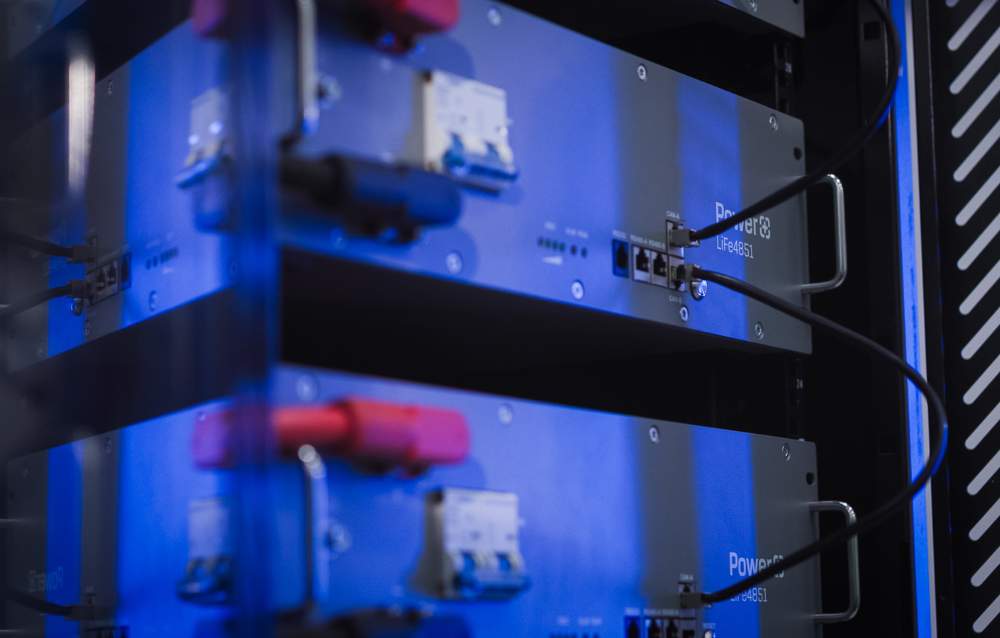
The Benefit for our LiFe4851 Battery
The LiFe4851 leverages the strengths of both certifications to deliver complete, real-world safety. UL1973 ensures the electrical and mechanical integrity of the system under fault conditions, while UL9540A confirms that thermal events are contained and fire propagation is prevented.
With UL9540A being relatively new in Australia, our system is ahead of the curve, offering a clear safety advantage over competitors.